Shrubs
Lilac trees and lilac bush are different but divvy up some similarity . But how can you tell the difference between the two ? And how exactly do they differ ? In this article , certified master gardener Liz Jaros test lilac tree diagram vs. shrub , and breaks down how to tell them apart by their appearances , as well as their other remainder & similarities .
Ushering in Spring each class with an burst of sweet odorous blossom , lilacs are diverse in bod and can grow up to 30 feet marvellous . Descended from25 + speciesand cultivated to develop thousands ofunique miscellanea , lilac can have impenetrable subdivision structure , small leaves , and uniform bloom convention .

Or they can be liberal and wild , with arch fore and capricious flowered displays . They might also be tall and single trunked with a wide canopy and big , marrow - shaped leafage . So how can you recount thedifference between a lilac shrub / bush and a tree ? With the term ‘ tree diagram ’ typically reserved for woody plant that grow marvelous than 15 feet , you might take over that prominent lilac change are trees and humble lilac varieties are shrubs .
And to some extent , you ’d be correct . But the lilac genus ( particularly its specie with a inclination to soar and sprawl ) makes things a bit more complicated than that . In this clause , we ’ll attend at the traditional characteristics of both Sir Herbert Beerbohm Tree and shrubs . We will then determine how these family are well applied to the lilacs we see most often in the landscape painting .
Contents
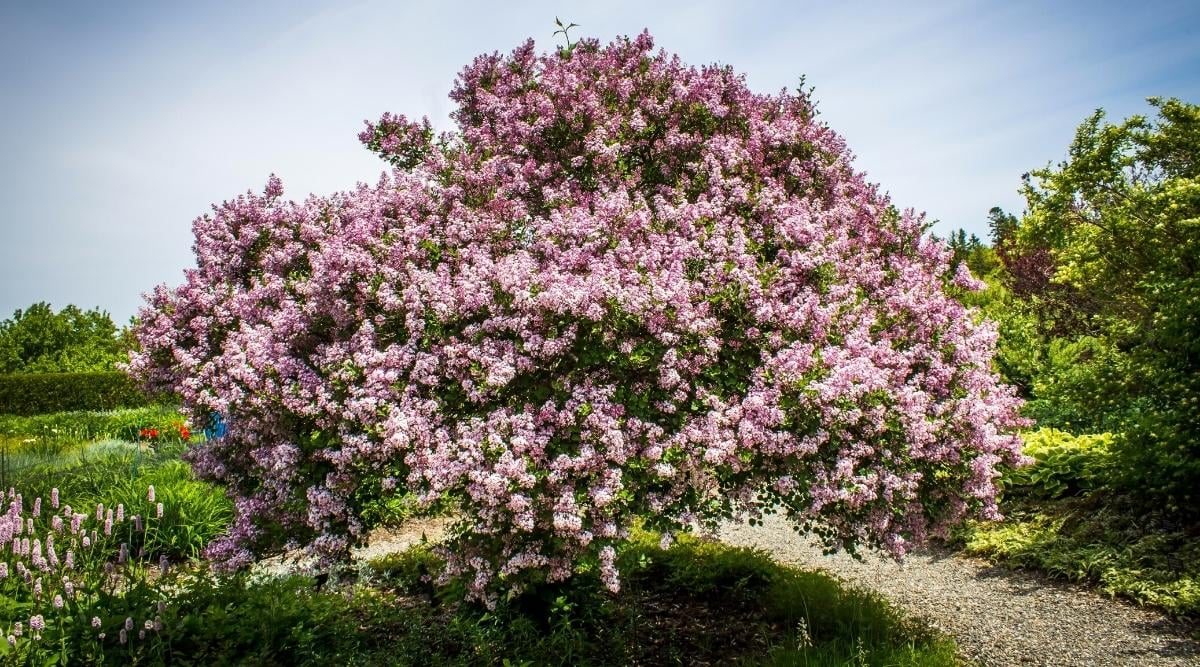
About Lilac Trees
When trying to determine if lilacs are trees or shrubs , it ’s important to take down that there is no nonindulgent scientific or botanical definition for the news ‘ Sir Herbert Beerbohm Tree . ’ For classification and communication design , a industrial plant is deliberate a Sir Herbert Beerbohm Tree if ithas a single bole , a pinnacle of at least 15 feet , and a well - defined canopy that commence at least 3 - 4 feet above ground .
Taking the definition a bit further , a Sir Herbert Beerbohm Tree is typically fend for by wood that is dead on the interior . It ’s thenlives and photosynthesizes toward its exterior , with an tabu layer of protective barque .
For the lilac genus , this class is expanded to include woody plants with multiple trunk of roughly equal girth . And it really applies to only one species ; the Japanese Tree lilac . It also applies to its race ; theChinese and the Amur tree diagram lilacs . Since they are all different in profile , let ’s look at the defining characteristics of each .

Japanese Tree Lilac
Packing a impact in the Spring landscape with bunch of fragrant ( sometimes overpowering or off - putt ) , This Sir Herbert Beerbohm Tree ’s white flush are 10 column inch wide and up to a foot long . This coinage can also be either undivided and multi - cauline . With an attractive shape , reddish bark , and white proboscis speckles , Japanese tree lilacscan reach height of 30 foot andspreads of 15 - 20 feet . They offer four - time of year interest , and are equally at home in the city , on a small property , or on the ramble grounds of a rarefied estate .
‘ Ivory Silk , ’ ‘ Chantilly Lace , ’ and ‘ Summer Snow ’ are the Japanese Tree cultivars most commonly used in contemporary landscape painting design .
Chinese Tree Lilac
Also early summer bloomer , Formosan tree diagram lilac direct out yellow - bloodless , honey sweet-scented flower clustering en masse . Smaller in size of it at 10 - 20 feet high and10 - 15 foot all-inclusive , with a more ticklish folio and branch complex body part , this metal money is often select for its unusual barque characteristics and winter interest . Its cinnamon toamber colored barkexfoliates in flat solid and Robert Peel after in the time of year .
‘ Beijing Gold , ’ ‘ Summer Charm , ’ and ‘ Yellow Fragrance ’ are popular Formosan Tree Lilac cultivars .
Amur Tree Lilac
This subspecies is native to Korea and easterly Russia . It maxes out at8 feet tall and 6 feet all-inclusive , making it an elision to the 15 - foot height rule . Its structure and lineage put it squarely in the tree category , but its wont is rounded and more shrub - the like than the other tree diagram lilacs .
Amur is a popular choice for small property and green . Its flower panicles are clean and fertile in early summertime with a pleasant scent . Amur has no direct cultivar .
About Lilac Shrubs
Now that we ’ve examine some member of the lilac tree family , get ’s counterpoint them with some lilac shrub to help illuminate the difference .
Traditionally , a shrub is fix as a multi - stemmed , woody plant that is round in shape and grim to the footing . It should have branch diameter of less than 3 inches . A shrub is also typically assumed to besmaller than a Sir Herbert Beerbohm Tree . This characterization will use to most shrubs we see in the landscape .
With lilacs , however , especially members of the common lilac family ( syringa vulgaris ) which can soar upwards to heights of 20 foot , the lines can get a short muzzy . But yes , these toweringeasy - to - grow woody plantsare still debate shrub .

The biggest eminence between a lilac tree with multiple trunks and a lilac shrub is that multi - stemmed ( often refer to as ‘ clustering ’ form ) Sir Herbert Beerbohm Tree will feature trunks that are rough equal to one another in width . Conversely , shrub will have stem of varying sizes and thickness with many lowly branch , chump , and offshoots .
Additionally , lilac trees will have aclearance between the dirt and the canopywhere there is no side forking . Shrubs will have growth extending from point all along the stem , beginning at dry land level .
An exclusion to this normal is lilac bush that havehad lower outgrowth pruned offto create a more ‘ tree - like ’ material body . Look for wounds on the lower third of stem to help ascertain if you might be mistaking a groom shrub for a tree .

Since lilac shrub descend fromthree main species(as well as their hybrids and cultivars ) , a closer examination of each category can facilitate boost your lilac shrub identification skills . Here are some of their defining characteristic .
Common or French Lilac
This is the lilac species that typically come to mind for all of us . A tight growing shrub with a wild substance abuse that can reachheights and widths of 20 feetif depart unchecked , rough-cut lilacs typically boast smooth , heart shaped leaves and traditional , cone - shaped blooms that are very fragrant .
‘ genius , ’ ‘ looker of Moscow , ’ ‘ Charles Joly , ’ and ‘ Miss Canada ’ are just a few of the rough-cut lilac kind you ’ll receive in residential and municipal landscapes . This particular lilac is apopular choice for containers .
Littleleaf Lilac
This little , orotund ornamental shrub follow in size thatdo not exceed 5 feet . It sport minor , fragrant , previous blooming flowers and make a skillful accent plant . ‘ Red Pixie , ’ ‘ Lemon Daddy , ’ and ‘ Superba ’ are all democratic cultivars .
Persian Lilac
grow 3 - 4 foundation tall and 8 - 10 feet wide , persian lilacs featuretight branching and a more summary habit . Flowers are small and pallid in color , and leaf are narrow-minded . It takes shearing well and is commonly used as a scurvy hedge . All Iranian lilacs are crossbreed of ‘ Laciniata ’ and ‘ Afghanica ’ species . There are no lineal cultivar but it come in several colour .
What’s a Shrub Tree?
Okay , here ’s where thing get really confusing . You ’ve in all probability seendwarf lilac ‘ trees’in the landscape painting that face like lollipops . They feature compact balls of leaves and bloom on top of minuscule , single trunks and are often called ‘ nanus trees , ’ but they are actually shrub that have been ingraft onto small tree radical stock .
So are these lilacs Sir Herbert Beerbohm Tree or bush ? I pretend they ’re a little of both . But the greenhouse catalog list them in the bush surgical incision under a ‘ midget on stock ’ subhead , so permit ’s go with the shrub .
All of the mixed bag you ’ll encounter in the landscape will settle from either ‘ meyeri ’ or ‘ palibin ’ species , which feature modest foliage and thick form . Some of the most popular lilacs on standard let in ‘ Miss Kim , ’ ‘ Tinkerbelle , ’ and ‘ Dwarf Korean . ’

Frequently Asked Questions
Horticulturally speaking , the Word are interchangeable and there is no difference . nonchalantly speaking , ‘ Dubyuh ’ is often used to describe amulti - halt woody plantthat is unpruned and unbridled , while ‘ bush ’ is typically used to discover a multi - stemmed woody plant that is groomed and controlled .
They both flower about the same continuance . There ’s no difference in bloom prison term based on the eminence of tree or bush .
In their native hardiness zone , both lilac trees and shrubsprefer full Dominicus . They can arise inpartial sunlight , but they may not bloom as much as a outcome .
Final thoughts
If you do n’t allow the common lilac ’s extreme acme throw you off or the shrub on standard ’s unusual stature trick you into thinking it ’s a dwarf tree , you should now be able to stroll through the lilac with a respectable grasp on thedifference between tree diagram and shrub . You might even be able to identify which lilac tree coinage you have planted in your front yard . You may also be capable to kindly correct your neighbor when she shows you her dwarf lilac ‘ Sir Herbert Beerbohm Tree . ’
Again , look for maturation near the base and a rounded shape to identify a lilac shrub and a single or adequate - stem tree trunk beneath an rarified canopy to identify a tree . With these thing in mind , you ’ll be able to apply this new botanical knowledge to other plants that dim the boundaries between tree and shrub as well .


